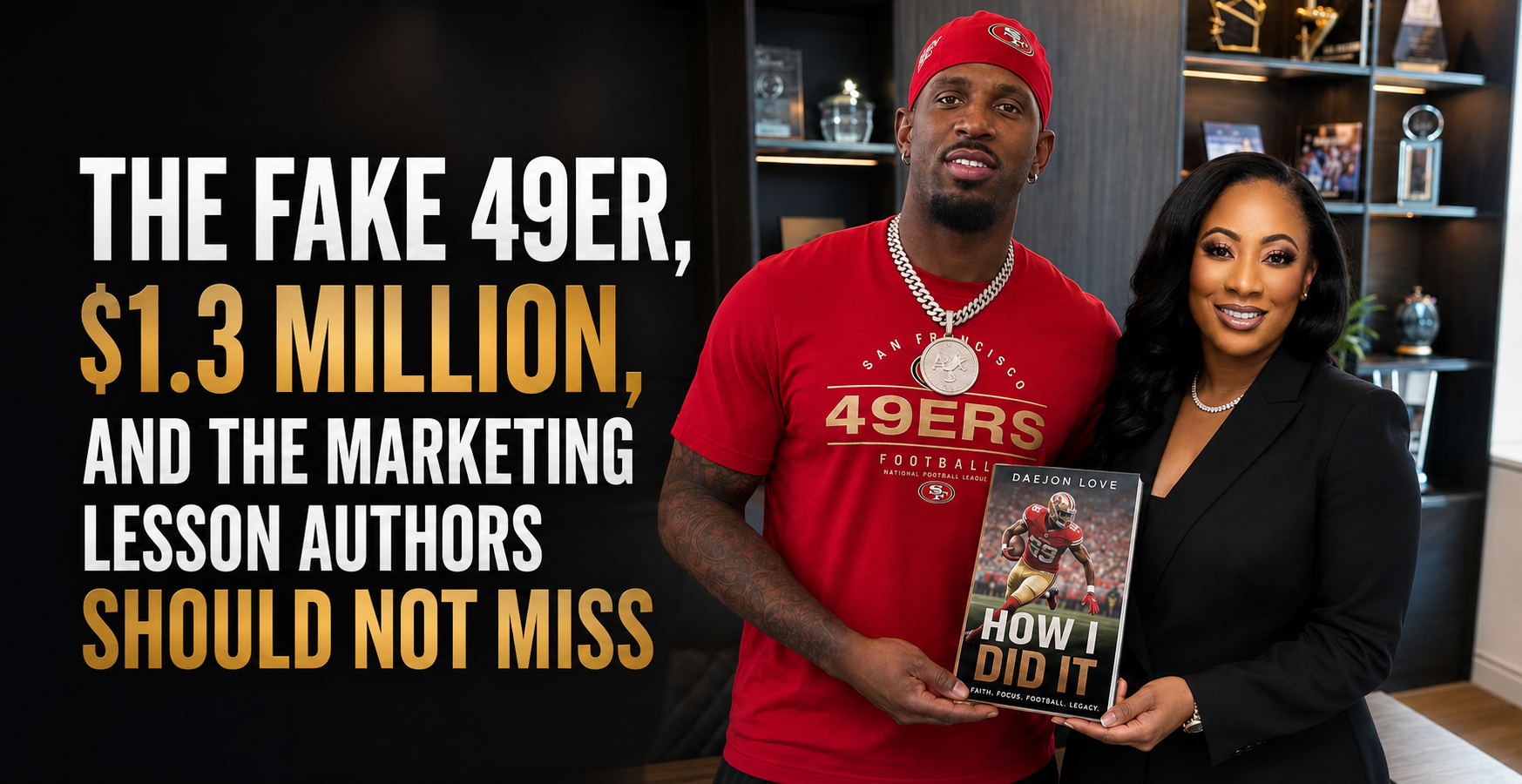
How authors can use trending stories to increase visibility, build authority, and market their books
A recent story involving a man accused of impersonating a San Francisco 49ers football player has gained national attention. Federal prosecutors allege that Daejon Labrayae Love created an image of wealth, success, and professional football status while building relationships with women he met online. Authorities say Love and an alleged accomplice received approximately $1.3 million from at least 26 women through fraudulent investment schemes. Both men have been charged, and the allegations have not yet been proven in court.
While the case itself is serious, there is also an important lesson for authors, speakers, coaches, and business owners about visibility, positioning, and the power of perception.
Perception and Visibility Matter
One of the biggest takeaways from this story is how much people can be influenced by what they see and believe. According to prosecutors, the image being presented included wealth, professional status, social media activity, and other signs of credibility.
For legitimate authors and experts, the lesson is not to create a false image. It is the complete opposite. If you have real experience, real results, a real book, and valuable information, people should be able to see evidence of it.
When someone searches your name online, can they find your book? Can they find articles you have written, podcast interviews, speaking engagements, media appearances, testimonials, or videos showing your expertise? Having credibility is important, but making that credibility visible is also important.
Use Trending Stories to Share Your Expertise
Authors can also learn from this story by understanding a marketing strategy called newsjacking. Newsjacking is when you connect your expertise to a story or topic that people are already discussing.
Instead of simply repeating the news, ask yourself, “What can I teach because this happened?”
A relationship author could discuss red flags when meeting people online. A financial expert could write about questions people should ask before investing money with someone. A branding expert could discuss the difference between perceived authority and proven credibility. A cybersecurity expert could talk about verifying someone’s identity online.
The story becomes the starting point, while your expertise becomes the lesson.
Your Book Does Not Always Have to Be the Story
Many authors believe every piece of marketing has to directly promote their book. That can actually make your content feel repetitive.
Sometimes your book does not need to be the main story. Instead, your book can serve as the credential that proves you have something valuable to contribute to the conversation.
A podcast host may not be interested in interviewing someone simply because they wrote a new book. However, that same host may be interested in someone who can explain why people ignore warning signs, how online credibility is created, or how consumers can protect themselves from scams.
That creates a natural opportunity to mention your book while still providing value.
Turn Your Expertise Into Timely Content
Authors should pay attention to stories happening in business, relationships, education, finance, leadership, technology, entertainment, sports, and culture. When a story connects naturally to something you teach, create content around it.
That content might become an article, social media post, email, podcast topic, video, workshop, or media pitch. The goal is not to comment on every trending story. The goal is to identify the ones where your knowledge can add something meaningful.
When done correctly, this strategy helps position you as someone who understands what is happening now and can provide useful insight.
Your Book Is Bigger Than a Book
Authors have to stop thinking about their books as products that only belong on Amazon or a bookstore shelf. A book represents ideas, experiences, frameworks, solutions, and expertise.
Instead of only asking, “How can I sell more books?” start asking, “How can the expertise inside my book become part of conversations people are already having?”
That question can lead to media interviews, podcasts, speaking opportunities, partnerships, clients, and ultimately more book sales.
Visibility is not simply about being seen. It is about being seen in the right conversation, at the right time, with something valuable to say.