Before You Pitch That Stage: 3 Questions Every Author Should Ask
You find an event accepting speaker applications. The flyer looks professional, the location sounds exciting, and you can already picture yourself on the stage with your book in hand.
Before you submit your name, pause and ask one question:
Is this the right room for my message?
For authors, speaking can create opportunities to share ideas, connect with readers, and introduce people to the work behind the book. But each opportunity requires time, preparation, and sometimes travel or other expenses.
A full calendar means more when your expertise matches what the audience needs.
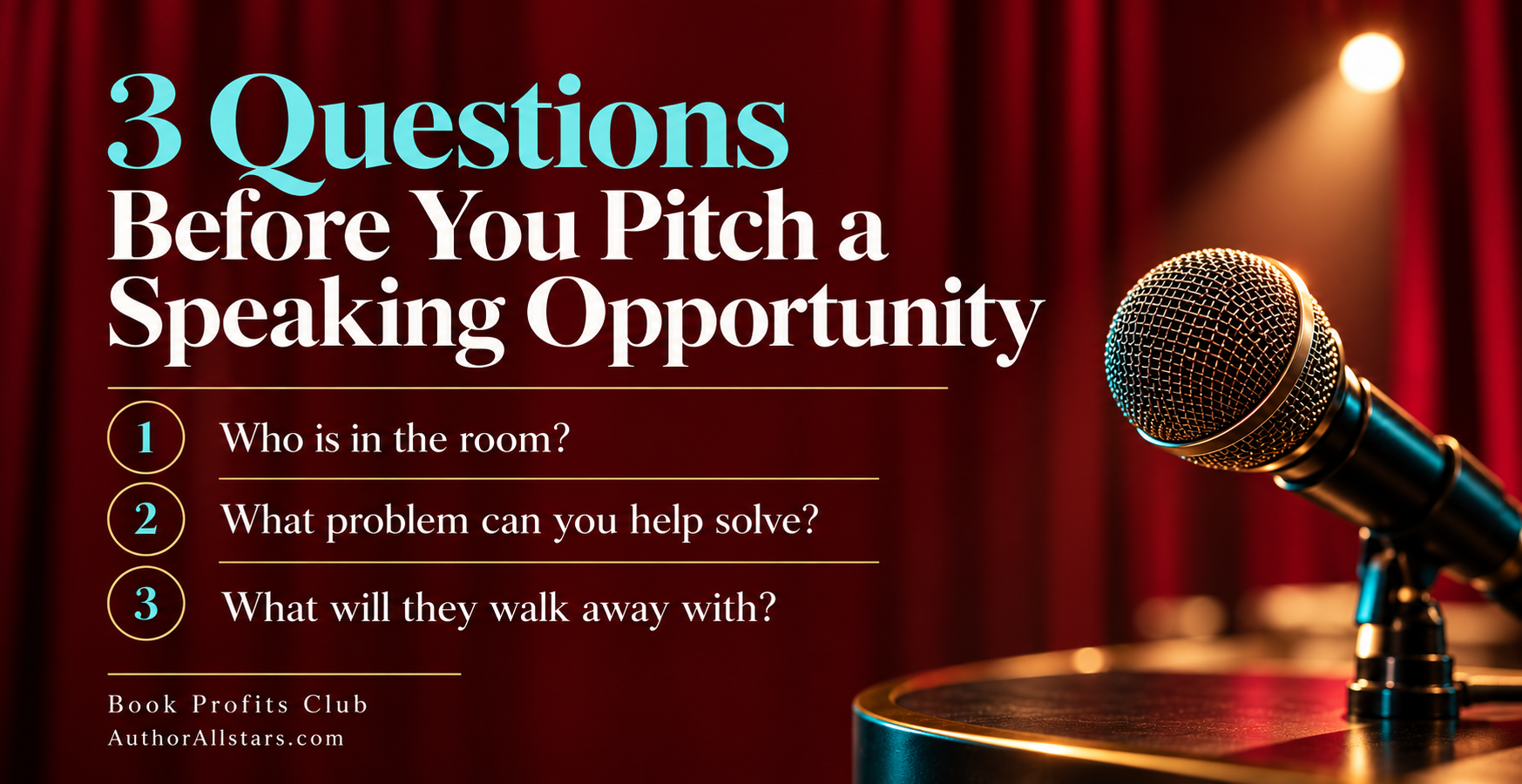
Before sending your next pitch, answer these three questions. Your answers will help you choose opportunities with purpose and explain your value to an event host.
1. Who Will Be in the Room?
“Business owners” might describe an audience, but it does not tell you enough to prepare a useful presentation.
A person starting a business after leaving a corporate job has different questions from someone managing employees and preparing to expand. Both are entrepreneurs. Their needs, experience, and priorities may be very different.
The same is true for parents, educators, ministry leaders, and aspiring authors.
Before pitching, look closely at the event’s audience. Read the event description, review past sessions, and pay attention to how the host describes attendees. If you still need clarity, ask:
“Who is this event designed to serve, and what are attendees hoping to learn?”
For authors, this step also helps connect the book to a specific reader.
If your memoir explores rebuilding after a major life change, which part of that experience would be most useful to this audience? Are attendees navigating a transition themselves, supporting someone through one, or learning how to write about their own experiences?
You do not need to tell your entire story in every room. Choose the part that helps the people in front of you.
The more clearly you understand the audience, the more focused your pitch can become.
2. What Problem Can You Help Them Work Through?
Your book may cover several themes. A speaking session needs a clear focus.
“Leadership,” “confidence,” and “personal growth” are topics. To develop a session, identify a specific question within that topic.
For example:
- Leadership: How can a new supervisor give useful feedback without avoiding a difficult conversation?
- Confidence: How can an author introduce their book at a networking event without feeling awkward?
- Personal growth: How can someone choose a practical next step when a major life change leaves them feeling stuck?
These questions give your presentation direction. They also help an event host understand where your session might fit.
Start by looking through your book for a lesson, method, exercise, or decision that you can teach within the time available. Then connect it to a situation the audience recognizes.
Instead of writing, “I would love to share my inspiring journey,” explain what attendees could learn from that journey:
“Drawing from the experiences in my book, I can teach participants a simple process for identifying their next step after an unexpected career change.”
Your story gives the lesson context. The lesson gives the audience something useful.
This approach also works for fiction authors. Depending on your experience and the event, you might teach character development, discuss the research behind your novel, or lead a storytelling exercise. Be clear about the connection between your book, your knowledge, and the audience’s interests.
3. What Can They Do Differently After Your Talk?
Imagine an attendee leaving your session.
What could that person do differently that afternoon or later that week?
“Feel inspired” may describe part of the experience you want to create. Go one step further and name an action.
They might leave with:
- A checklist for preparing their first podcast interview.
- A draft introduction they can use at a networking event.
- Three questions to ask before accepting a business partnership.
- A short exercise for identifying the central message of their book.
Choose a takeaway you can realistically deliver within your session.
A 20-minute presentation needs a tighter promise than a two-hour workshop. If you have limited time, teach one useful process and let attendees practice part of it.
For example:
“By the end of this session, participants will have drafted a three-sentence introduction that explains who they help, what they teach, and how to learn more.”
That outcome helps you plan the presentation. It also gives the host a clear reason to consider it.
Turn Your Answers Into a Clear Pitch
Once you have answered the three questions, bring them together:
“For [specific audience], I can teach [useful skill] so they leave with [practical takeaway].”
An author who teaches leadership might write:
“For first-time supervisors, I can teach a simple structure for giving constructive feedback so they leave with a conversation outline they can use with their team.”
An author who writes about publishing might say:
“For aspiring nonfiction authors, I can teach a process for narrowing their book idea so they leave with a working reader profile and a focused book promise.”
Use that sentence as the foundation of your outreach. Then add a brief explanation of why your session fits that particular event.
For example:
“Hello [Host Name],
I saw that your upcoming conference includes sessions for first-time managers. My book addresses the communication challenges new leaders face, and I would like to propose a session titled ‘How to Give Useful Feedback Without Avoiding the Conversation.’
Participants would learn a simple feedback structure and leave with a conversation outline they can adapt for their teams.
Would this session fit the audience and goals you have planned?”
Add relevant credentials, a speaking clip, or a requested application link as appropriate. Keep the audience benefit easy to find.
Check Whether the Opportunity Supports Your Goals
Audience fit is essential. The opportunity also needs to make sense for your author business.
Before committing, review the speaking format, preparation required, travel costs, compensation, and expectations for promoting the event. Clarify whether book sales are allowed and whether attendees can choose to stay connected with you afterward.
A smaller workshop may give you time for meaningful conversations. A larger conference may introduce your message to more people. Consider what each opportunity offers and what it requires.
You should be able to explain why the event deserves a place on your calendar.
Before You Send Your Next Pitch
Return to these three questions:
Who will be in the room?
What problem can I help them work through?
What can they do differently after my talk?
When your answers are clear, you have a stronger foundation for choosing an event, writing your pitch, and preparing a useful presentation.
Your book holds ideas that can serve people beyond its pages. Start by finding the audience that needs those ideas and giving them a practical way to use what you teach.
What is one audience you want to serve, and what would you help them do?
Want support turning your book into speaking opportunities, visibility, and business growth? Visit BookProfitsClub.com.