Is AI Going to Hurt the Book Industry?
Here’s the Real Answer—and What Authors Should Do Next
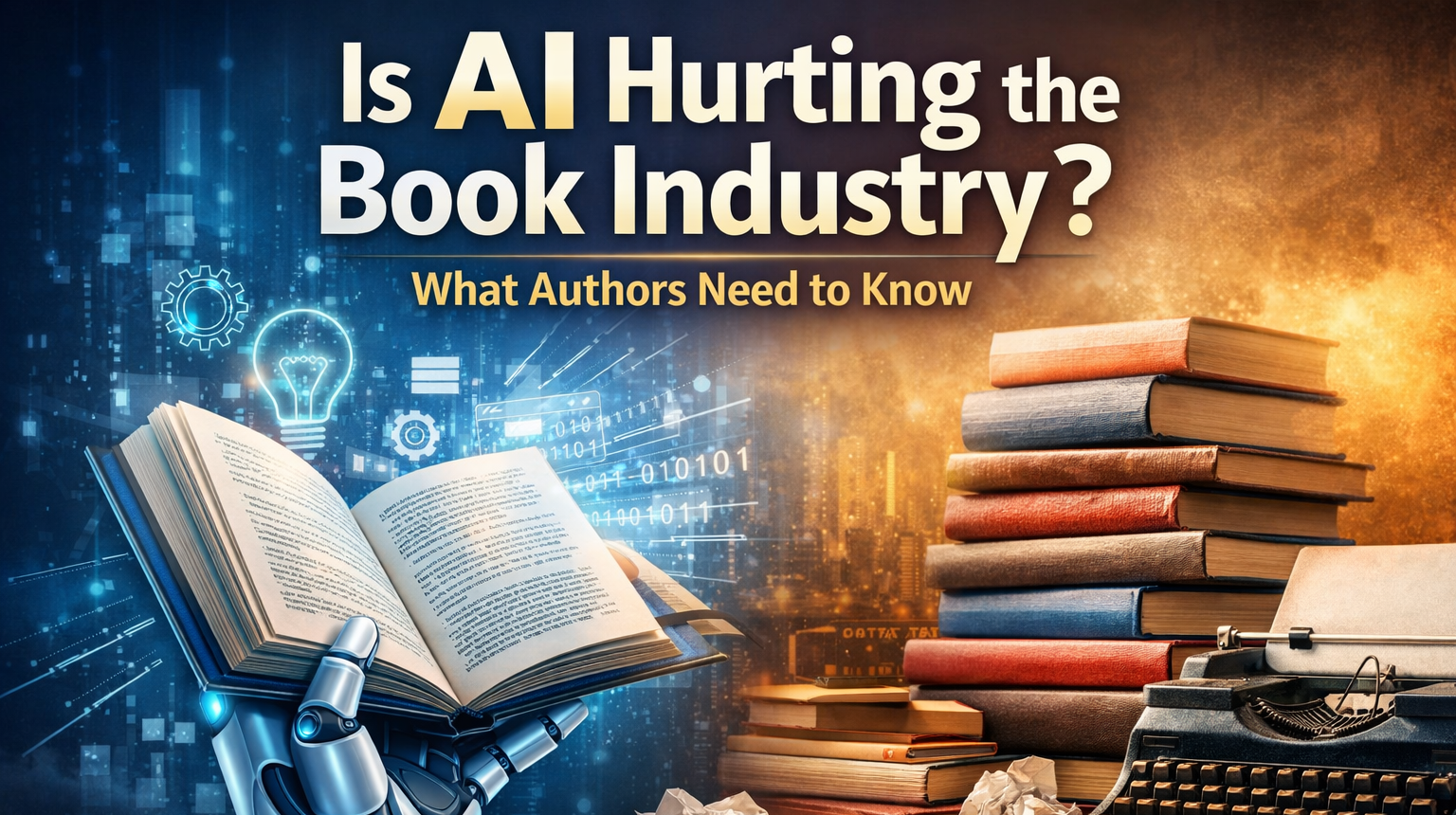
Artificial intelligence is already reshaping the book industry. Some people are excited because it makes writing and publishing faster. Others are worried because it makes it easier to copy, flood the market, and cut corners. Both sides are right. AI can absolutely damage parts of the industry, but it can also give serious authors a major advantage. The difference will come down to one thing: whether authors use AI as a shortcut to create “more”, or as a tool to create better work, faster visibility, and stronger business results.
Right now, the biggest threat AI brings is not that it can write. The threat is that it can produce content at scale. That means online bookstores can get flooded with low-quality books, recycled ideas, and overly generic writing that feels the same from one title to the next. When readers buy books that disappoint them, they become more cautious. They stop taking chances on new authors. They rely more on familiar names, heavy reviews, or social proof before they purchase. In a crowded market, trust becomes the currency, and AI-generated junk can lower trust for everyone—even the authors doing it the right way.
Another major concern is originality and ownership. Some people use AI to rewrite existing books, blog posts, or articles and then publish the results as if it’s brand new. Even when it’s not direct copy-and-paste plagiarism, it can be close enough to cause real problems. It also creates confusion around voice. Readers can tell when something sounds lifeless, overly polished, or emotionally empty. The industry has always had ghostwriters and editors, but AI makes it cheaper and easier for anyone to create work that feels mass produced. That can weaken the bond between author and reader, especially in genres where authenticity matters most—like memoir, self-help, leadership, and business.
AI also impacts pricing and competition. When a platform is overloaded with cheap, fast books, the market naturally starts expecting lower prices. That can pressure authors who depend mainly on royalties. If an author’s plan is “write the book and hope it sells,” AI makes that plan harder because the noise level is higher than ever. This doesn’t mean authors can’t make money. It means authors have to stop thinking like hobbyists and start thinking like business owners. The authors who thrive will be the ones who build demand instead of waiting for discovery.
Here’s the part people miss: AI won’t destroy the book industry because books are not just information. People don’t buy books only for facts. They buy books for transformation, identity, connection, and a point of view. Readers want to feel something. They want to see themselves in a story or trust an expert who has lived what they’re teaching. AI can mimic patterns of good writing, but it cannot replace real experience, real convictions, and real credibility. A strong author brand is still stronger than any tool. The authors who win in the AI era will be the ones who lean into their humanity, not run from it.
So how do authors take advantage of AI without losing their voice or their integrity? The best approach is to use AI for support work, not soul work. Use it to speed up the parts of publishing that slow you down: brainstorming titles, organizing your outline, planning your launch, mapping content, repurposing chapters into emails, and turning book themes into podcast talking points. AI can help you move faster in marketing, too—creating variations of captions, pitch emails, press angles, and simple ad copy. That consistency matters because most authors don’t fail because their book is bad. They fail because they stop promoting, get overwhelmed, or don’t have a system.
At the same time, the message must stay yours. If AI writes the whole book and you barely touch it, your readers will feel it. The tone will be flat, the stories will be vague, and the examples won’t have the specificity that builds trust. The best books are not generic. They are sharp. They include real moments, real lessons, and clear direction. AI cannot replace your personal stories, your client results, your frameworks, or your lived perspective. That is your unfair advantage, and it becomes even more valuable when everybody else starts sounding the same.
Another smart move for authors is to build outside of the platforms. If your entire business depends on Amazon search results or social media algorithms, AI-driven competition will make your results unstable. But if you build an email list, a community, a live training rhythm, and relationships through podcasts and events, you own your audience. You don’t have to beg to be seen. You can create demand on purpose. In a noisy industry, direct connection beats “hoping” every single time.
Finally, the biggest opportunity in the AI era is using a book as a business tool instead of a standalone product. Royalties are nice, but the real money is what the book leads to: speaking opportunities, coaching, consulting, workshops, courses, memberships, sponsorships, and brand partnerships. When you treat your book like the front door to a bigger offer, AI cannot take your income—because your income isn’t coming from book sales alone. Your book becomes your credibility piece, your lead generator, and your positioning tool.
AI is going to change the book industry, no doubt. It will reward speed, punish laziness, and expose authors who don’t have a plan. It will also create a wave of mediocre books that make it harder for readers to find quality. But for authors who write with purpose, build a real brand, and use AI to market smarter and move faster, AI is not a threat—it’s leverage. The industry isn’t dying. It’s upgrading. And the authors who upgrade with it will come out on top.