If you’re an author, you already know the book is only part of the game. The real win is getting your message in front of more people consistently. That’s why podcasts matter so much this year. They let you build trust faster, tell your story in a real way, and put your name in rooms you’d never reach with a single social post.
Podcasts are one of the easiest visibility plays because the audience is already paying attention. They chose to press play. And when you show up with a clear message, a solid topic, and a simple call-to-action, you can turn one interview into book sales, new followers, email subscribers, and even speaking opportunities.
Why podcasts work so well for authors
Podcasts give you something most marketing doesn’t: time. You’re not fighting for attention in a 10-second reel. You can explain your “why,” share the turning point behind your book, and teach something useful that makes people want more.
They also build credibility. When someone hears you on a show they already trust, you borrow that trust. That’s powerful. One strong interview can create more qualified leads than weeks of random posting.
And here’s the part many authors miss: podcasts create content for you. You can repurpose one interview into short clips, quotes, blog posts, emails, and speaking topics. It’s not just exposure—it’s an ongoing content engine.
Step 1: Get clear on what you want from podcast interviews
Before you start pitching, decide what the win is. Is it book sales? Email list growth? Coaching clients? Speaking gigs? Media features? You can get all of those from podcasts, but your approach changes based on the goal.
Also, lock in 2–3 topics you can speak on confidently. Podcasts don’t book “authors.” They book interesting conversations. Your book is the proof, but your topic is the hook.
Step 2: Create a simple podcast pitch that doesn’t sound desperate
Most pitches fail because they’re too long, too vague, or too “me, me, me.” Keep it simple:
- Who you are in one line
- The topics you can speak on (2–3 options)
- Why their audience will care
- A short credibility line (results, experience, or unique story)
- One link (your media kit or website)
You do not need a fancy publicist. You need clarity, a clean message, and consistency.
Step 3: Find the right shows (not just big shows)
Start with podcasts that already interview authors, coaches, speakers, or entrepreneurs. Look for shows where your audience already hangs out.
Easy ways to build a list:
- Search your topic + “podcast” on Google and YouTube
- Use Apple Podcasts and Spotify categories
- Check who interviewed authors similar to you
- Look at podcast guest directories and Facebook groups
Smaller podcasts are not “less than.” Many have loyal audiences and higher trust.
Step 4: Pitch daily, follow up weekly
If you want consistent bookings, treat it like outreach. Pitch a few shows per day, track who you contacted, then follow up 5–7 days later.
Most people don’t respond the first time. Not because you’re not good—because they’re busy. The follow-up is where most bookings happen.
Step 5: Show up like a pro and make it easy to buy from you
When you get booked, don’t wing it. Have a simple plan:
- Your main story point (the moment that changed everything)
- 3 value points you can teach clearly
- A call-to-action that matches the show
At the end, tell listeners exactly what to do next. Make it simple. One link. One next step.
Want help getting booked on podcasts?
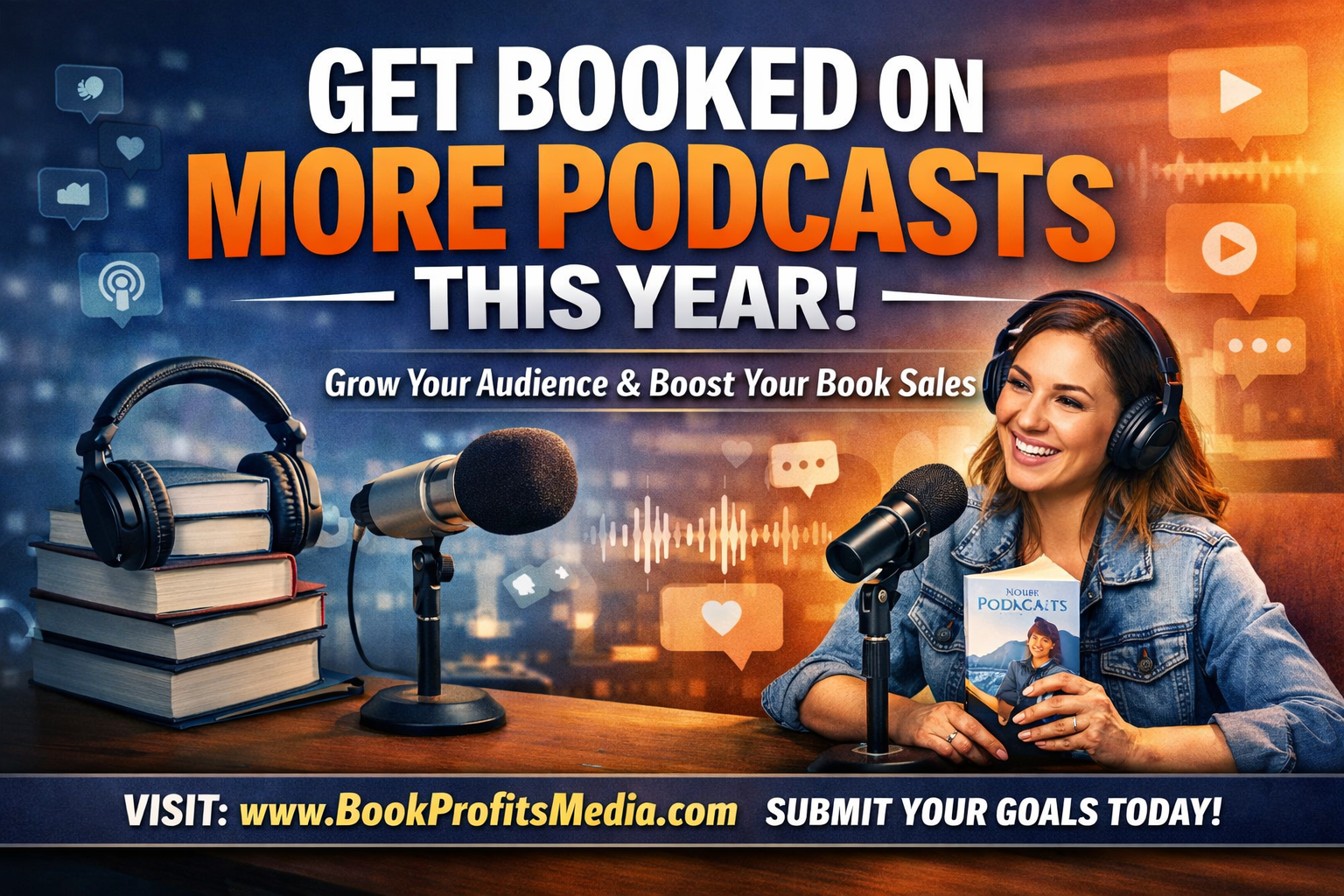
If you want support getting on podcasts this year, go to www.bookprofitsmedia.com and submit your goals today.